Beyond the Box: Small Parts, Big Seasons — How a $5 Repair Kit Keeps Donated Cleats Alive
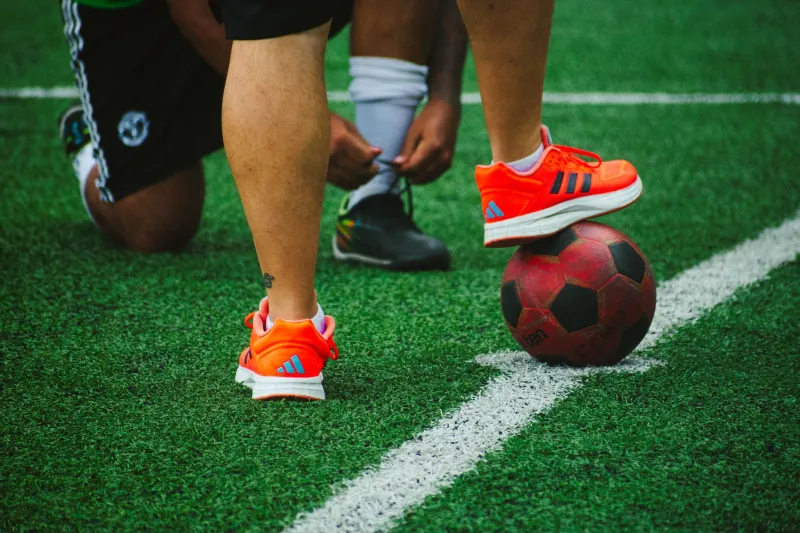
Ask any of our distribution coordinators what runs out first in the field, and you won't hear 'cleats.' You'll hear 'laces.'
It surprises people. We collect thousands of pairs of boots every year from generous donors across the US — garage sales in Ohio, team cleanout drives in Texas, end-of-season bins outside soccer complexes in Colorado. The boots arrive. The kids are thrilled. And then, eight months later, a coordinator in rural Malawi sends us a photo: a perfectly good pair of size 5s, sole intact, upper barely scuffed, sitting unwearable because the lace snapped during a pickup game and nobody had a replacement.
That photo changed how we think about giving.
The Weakest Link Problem
Here's the thing about donated footwear: it rarely fails all at once. It fails at the smallest point of stress. A lace frays. An insole compresses into a flat pancake. A single loose eyelet lets the tongue flop around until the fit is gone. None of these are fatal flaws — they're five-minute fixes, if you have the five minutes of supplies.
But in many of the communities we serve, those supplies simply don't exist. There's no big-box store down the road stocking a 54-inch flat lace in youth sizes. There's no Amazon Prime delivering replacement insoles to a village two hours from the nearest paved road. A boot that would be a quick fix in a suburban American garage becomes shelf inventory in a place where every playable pair matters.
So we started asking a different question. Not just how do we get more boots over there? but how do we keep the boots we've already sent, playing?
The Repair Kit Initiative
Last year, we piloted something simple: every shipment of donated cleats now travels with a repair kit. Not a fancy one. A quart-sized zip bag containing:
- Two sets of replacement laces in assorted lengths (one pair of round, one flat — different boots, different needs)
- Adhesive insoles or generic inserts that can be trimmed to size with scissors
- Heavy-duty needle and bonded thread for stitching a splitting seam
- Shoe goo or a flexible adhesive for re-attaching a peeling sole
- A simple illustrated care card — no words required, just pictures
The results have exceeded what we hoped. Local coordinators, many of them teachers and coaches, started running 'repair days' alongside distribution days. Kids learn to re-lace their own boots, patch a seam, or glue down a loose sole. It's part maintenance, part pride of ownership — and honestly, part shop class that a lot of these kids have never had access to.
One coordinator in Zambia told us the average lifespan of a donated boot in her program went from roughly one season to three. That's not a small improvement. That's tripling the impact of every single pair an American family drops in a donation bin.
Why Durability Is the Future of Sports Philanthropy
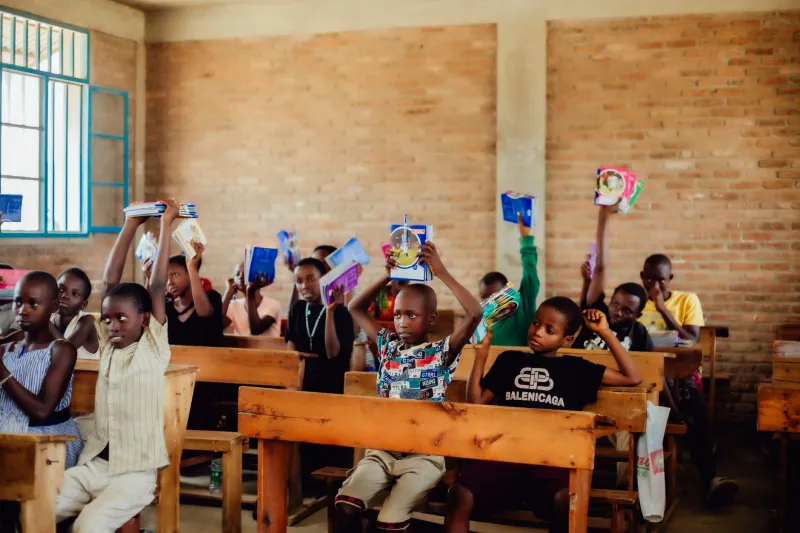
There's a temptation in charitable giving to focus on the big, photogenic moment: the box opening, the first pair of boots, the beaming kid holding them up. We love those moments too. But the moment nobody photographs — the re-lacing on a dusty sideline, eighteen months later — is where the real value lives.
Durability is a mindset shift. It means we stop measuring success in pairs delivered and start measuring it in seasons played. A boot that lasts four years in the hands of a kid who knows how to care for it is worth more than four boots that each die in year one.
And here's the part that should make US donors sit up: you have more influence over that lifespan than you think. It starts before the box seals shut.
Donor DIY: Prep Your Cleats for a Long Second Life
If you're cleaning out the garage this spring or running a team gear drive, here's how to send boots that go the distance:
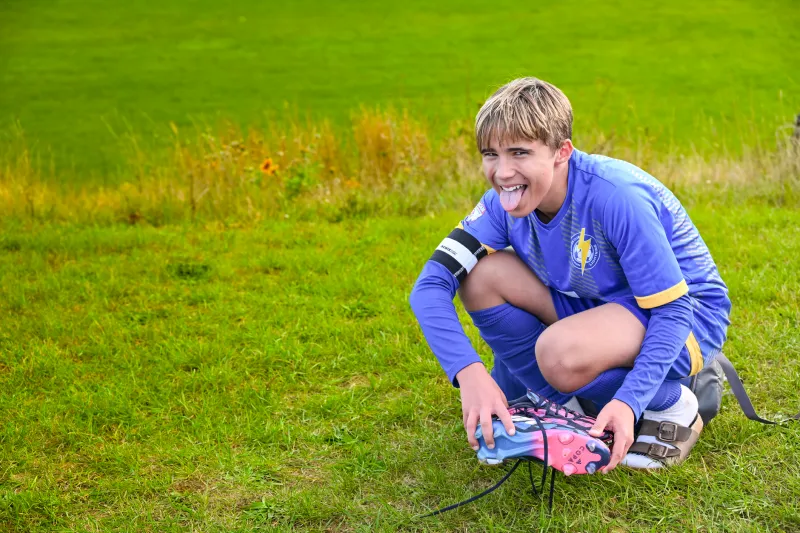
1. Retire the laces, don't pass them on. If the laces on your kid's old cleats are gray, frayed, or stiff with mud, cut them off and toss them. Include a fresh pair — even a $3 set from any US sporting goods store. That single addition can double the usable life of the boot.
2. Pull the insoles and check them. If they're flattened, cracked, or smell like a locker room in July, replace them with inexpensive adhesive or trim-to-fit inserts. Insoles are the difference between a boot that fits and a boot that gets endured.
3. Scrub, then dry fully. Mud holds moisture, and moisture rots stitching and foam. Clean the boots with mild soap, let them air-dry for a full 48 hours, and skip the bleach — it weakens fibers.
4. Glue now, so it doesn't peel later. If a sole edge is lifting, a bead of flexible shoe adhesive pressed overnight turns a 'maybe' donation into a 'yes' donation. It costs about $6 and takes five minutes.
5. Toss in a spare lace set for the box. Even if you're only donating two pairs, adding an extra set or two of assorted laces means the program has spares for the pair that arrives with a snap waiting to happen.
6. Include a note. Sounds small. Isn't. Coordinators tell us kids keep notes tucked into boot boxes for years. A sentence about where the boots came from — 'worn by a sixth-grader in Minnesota, hope they treat you well' — turns equipment into a connection.
One Pair, Longer Story
We're not going to stop collecting boots. The need is enormous, and American closets are, frankly, full of the answer. But the next chapter of this work isn't just about getting gear into kids' hands — it's about giving them the tools to keep it there.
A cleat holds a foot to the ground. A lace holds the cleat together. And a kid who learns to fix both holds something else entirely: the knowledge that the game doesn't stop when something breaks.
Pack the repair kit. Send the spare laces. The season you extend might be someone's whole childhood.
Ready to donate? Visit bootsforafrica.org to find a drop-off point near you or learn how to organize a drive with your local team.