Homework Before Halftime: The Report Card Stuffed in Every Boot Box
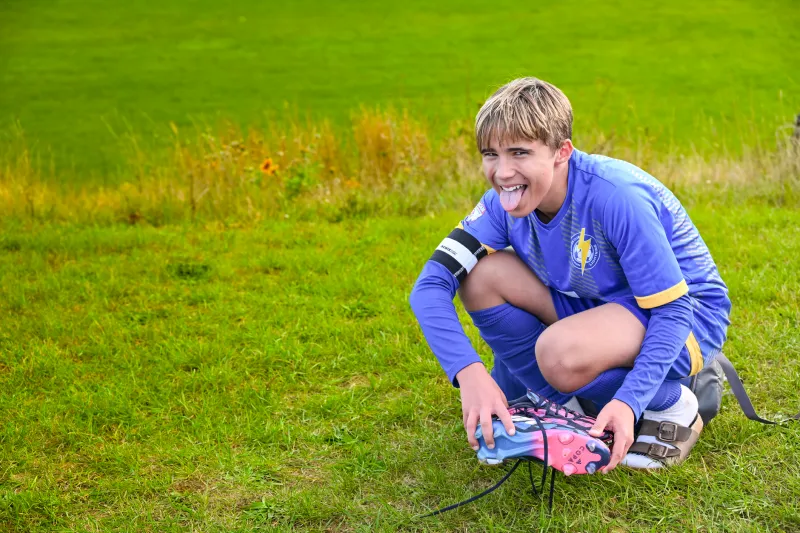
Here's a question we get from American donors all the time: why not just send the boots? No strings, no fine print, just gear for kids who need it.
It's a fair question. And the answer, according to the coordinators who run our partner programs on the ground, is the reason your donated cleats end up doing double duty. In the communities we serve across Ghana and Malawi, a pair of boots isn't just equipment. It's leverage — the good kind.
The Deal on the Ground
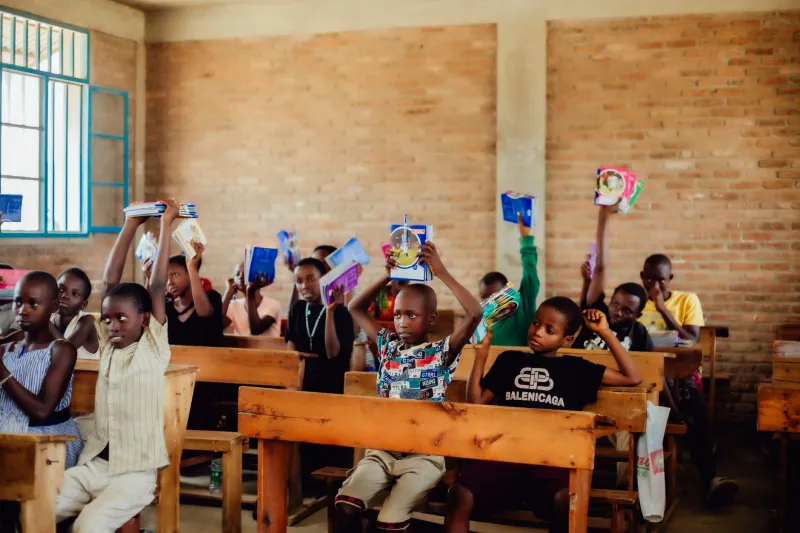
At a partner school outside Kumasi, Ghana, distribution day looks a little different than you might expect. Before any box opens, program coordinator Efua Mensah gathers the students in a semi-circle under the mango tree and walks through what she calls "the agreement."
Attendance records get checked. So do report cards — not for straight A's, but for effort and presence. Kids who've been showing up and turning in homework go home with cleats that afternoon. Kids who've fallen behind get a plan, a study buddy, and a follow-up date.
"The football is the hook," Efua told us. "The education is the catch. These children would run through a wall for a spot on the team. So we put the classroom between them and the pitch."
It works. Since tying boot distribution to attendance targets three seasons ago, the school reports enrollment among girls aged 10 to 14 is up nearly 40% — a demographic that, across much of rural sub-Saharan Africa, is often the first to drop out.
Why 'Boots for Homework' Actually Works
If you're a parent in Ohio or Texas, think about the youth sports ecosystem you know: registration fees, carpools, team snacks, the whole Saturday-morning machine. Participation is baked into the culture.
Now imagine soccer with none of that scaffolding. A talented twelve-year-old in rural Malawi might never set foot on an organized pitch — not because she doesn't love the game, but because there's no structure pulling her toward it. School, by contrast, is a structure that already exists. It has attendance rolls, teachers, report cards.
The insight of our partner programs is simple: don't build a new system. Plug the motivation of football into the one that's already there.
"A donor in Denver sends cleats," explains Joseph Banda, who coordinates our Malawi programs. "Those cleats become a reason to enroll. Enrollment becomes a desk. A desk becomes a future. The boot is the smallest, cheapest part of that chain — and the spark that starts it."
Three Schools, Three Versions of the Same Idea
Kumasi, Ghana — Attendance-first. Here, boots are tied to showing up. Miss fewer than a set number of school days per term and you're in the running for the season's distribution. Coaches double as attendance checkers, and the school says truancy among program participants has dropped to almost zero.
Lilongwe District, Malawi — Grades-and-growth. This program doesn't demand perfect marks. It looks for improvement. A student who moves from a failing grade to a passing one is eligible, which coordinators say keeps struggling kids motivated instead of discouraged. Leadership is part of the mix too: older students who tutor younger ones earn priority spots on the team roster.
Northern Ghana — Girls' enrollment focus. Our newest partnership specifically reserves a portion of each shipment for girls' teams, where the enrollment effect is strongest. Mothers in the community serve as the verification committee — a local trust structure that outside consultants could never replicate.
What This Means for Your Donation
If you've got last season's cleats sitting in a mudroom bin, here's the honest truth: you're not just donating footwear. You're funding an incentive system that keeps kids in classrooms.
A few practical notes for donors:
- Condition matters more than brand. These boots need to survive two more seasons of gravel pitches. Check the studs and stitching before you box them up.
- Kids' sizes are the gold. Most program participants are between 8 and 14. That size 1–5 range you're staring at? Send it.
- Add a note, not just gear. Program coordinators tell us the letters tucked into boxes get read aloud in classrooms — and yes, they become motivation too.
The American soccer gear machine is a giving superpower precisely because our kids outgrow cleats so fast. Every fall and spring, thousands of pairs sit in garages from Seattle to Atlanta, one garage-sale away from oblivion.
Send them our way instead. Somewhere in Kumasi, a student is doing her math homework right now because of what's waiting for her at practice.
That's the real story in every box we ship. The boots are just the beginning.