Match Day Only: The Kids Who Save Their Boots Like Sunday Clothes
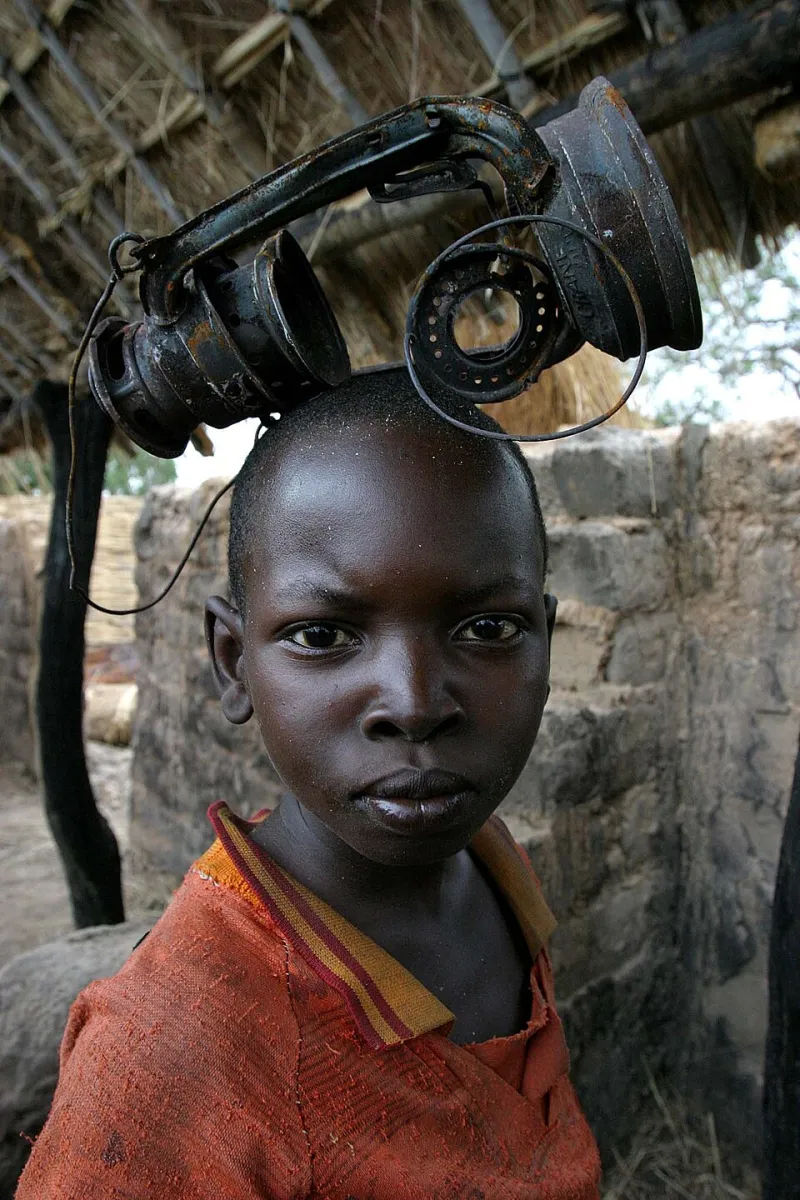
Photo: hdptcar from Bangui, Central African Republic, CC BY-SA 2.0, via Wikimedia Commons
The Boot in the Backpack
The first time our distribution partner in Lusaka described it to us, we assumed we'd misunderstood. "The children often don't wear the boots you send," he said. "They carry them."
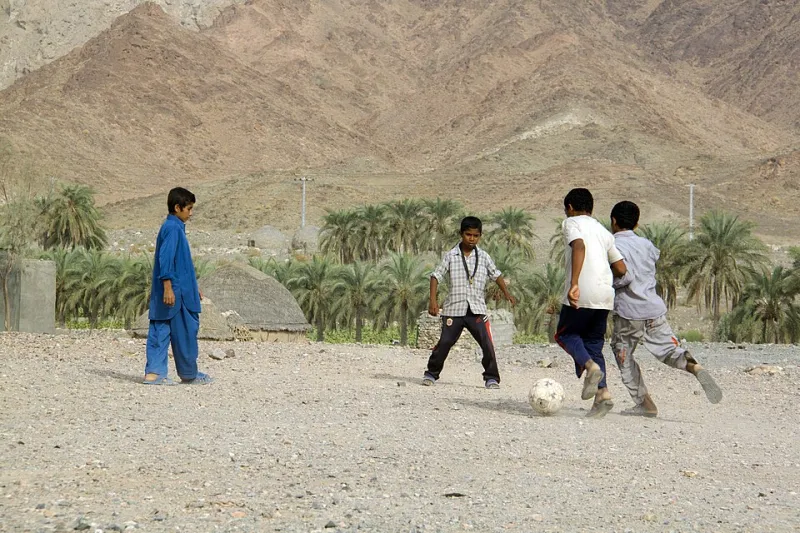
He went on to explain something that has reshaped how we think about every box we ship: for many kids, a pair of football boots isn't everyday footwear. It's a prize — closer to a school uniform or a holiday outfit than to sneakers. Walking five, seven, even nine miles to school is done barefoot or in worn sandals. The cleats come out only on match day, or on the patch of ground a neighborhood claims as a pitch.
If you've ever kept a pair of shoes for "good" — the heels your mom saved for church, the sneakers you refused to wear outside — you already understand the instinct. It's just that most American kids have never had to apply it to the only athletic shoes they own.
One Pair, Three Feet
The sharing arrangements our partners describe are as inventive as anything you'd see in a rec-league carpool. In one village outside Lilongwe, a 12-year-old and his younger brother alternate weeks: one wears the boots to training while the other runs drills in bare feet, then they swap. In another community, a single pair serves two sisters who play in different age divisions, timed so their matches never overlap.
We've heard of cleats worn with the laces double-knotted to accommodate a growing foot, and of boots passed from a graduating player to a teammate the way a varsity jacket might change hands at a US high school.
This is why we bristle a little when people call a donated pair of cleats "a small thing." A single pair can be the difference between two siblings both getting to play — or neither.
What This Changes About What We Ship
Understanding these trade-offs isn't just touching — it's operational. Here's how it directly shapes our work, and how it should shape your donation:
Size range matters more than size quantity. Because boots are shared and handed down, we need a deep bench of sizes from youth 11 through men's 9 — not just the popular sizes. That beat-up pair of size 13s in your garage? Honestly, those are harder to place. The size 3s your kid outgrew in a season? Gold.
Durability beats flash. A boot that will be carried in a backpack, walked in on dirt roads, and stretched across two or three wearers needs to hold up. Molded plastic studs on firm-ground soles consistently outperform anything fragile or fashionable. Save the carbon-fiber experiment cleats for the shelf.
Pairs must be pairs. It sounds obvious, but tied-together cleats get separated in transit and storage constantly. Lace them to each other or rubber-band them as a matched set. A single left boot helps no one — especially not a family splitting wear time.
Socks and shin guards multiply the gift. A shared pair of boots plus two pairs of socks means the sharing is actually comfortable. It's the cheapest way to double a donation's impact.
The Nine-Mile Question
There's a harder question underneath all this, and our partners don't sugarcoat it: sometimes a child walks a long way barefoot specifically so the boots stay clean, dry, and intact for the weekend. The boots are so valuable that wearing them for the walk feels like a risk.
We don't think the answer is to ship more boots and call it solved. It's to keep listening — to ask partners what's actually needed before the containers are packed, to prioritize everyday sturdiness alongside match-day quality, and to be honest with donors that the need is specific, not generic.
That's the philosophy behind our whole model: ask first, ship second. It's the reason your donation form asks for sizes rather than just "boots, any condition."
What You Can Do This Week
If this story resonates, here's the practical version:
- Check your closet for the sizes that get forgotten. Youth sizes 1 through 5 are our most-requested and least-donated range.
- Clean them, but don't rehab them. A quick scrub and dry laces is perfect. We handle the rest.
- Add $5 to cover shipping. The boots are donated; the freight isn't. A few dollars per pair is what moves them from your driveway to a match day.
- Ask your kid's team to do a size-focused drive. Target the sizes that get left behind.
Every Pair, Every Foot
Somewhere right now, a pair of boots that left a garage in Ohio or a garage sale in Georgia is sitting in a backpack in Zambia, waiting for Saturday. Two kids will take turns lacing them up. They'll be treated like the treasure they are.
That's the story your donation tells. Help us write the next chapter — one well-loved, right-sized, tied-together pair at a time.