One Pair, Two Continents: The Journey of a Single Set of Cleats
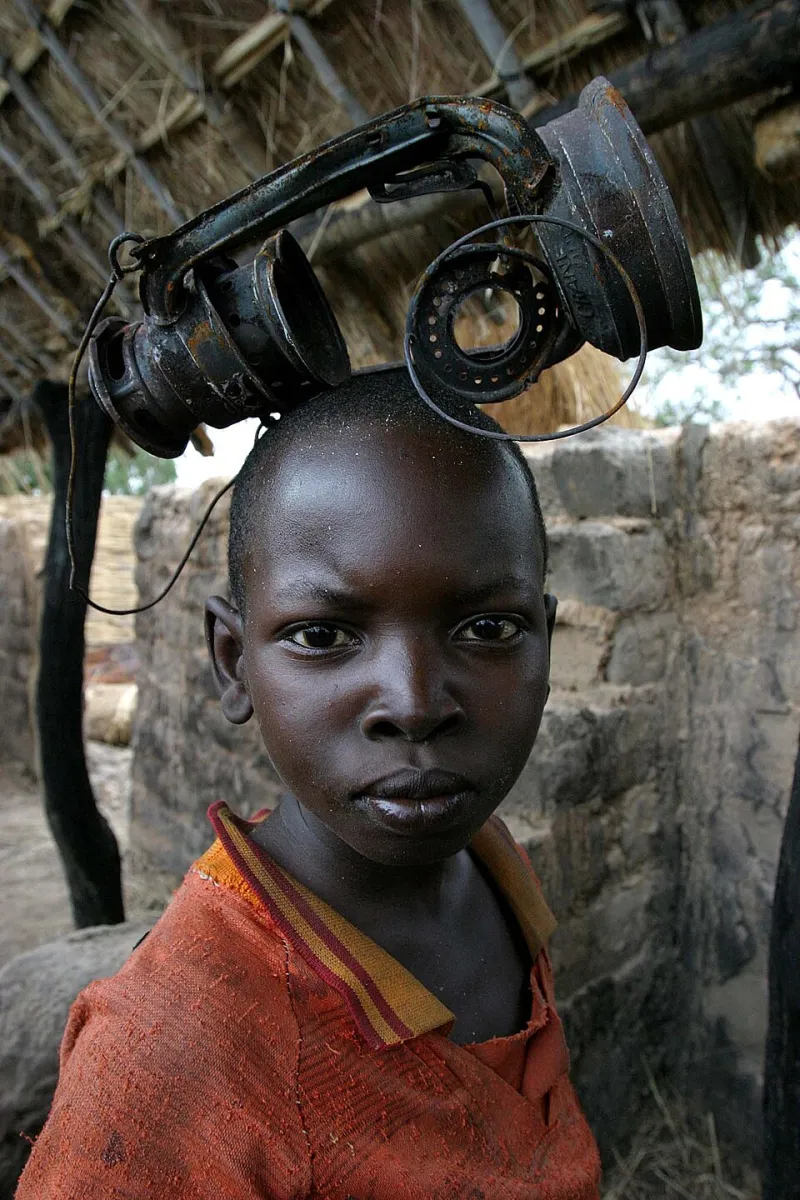
Photo: hdptcar from Bangui, Central African Republic, CC BY-SA 2.0, via Wikimedia Commons
The Driveway in Columbus
It started on a Saturday morning in suburban Columbus, Ohio. Sarah Mitchell was hauling garbage bins to the curb when she spotted the box her son Tyler had left by the garage — three seasons of outgrown soccer gear, including a pair of size 4 black-and-neon cleats he'd worn exactly one fall before his feet betrayed him and grew two sizes overnight.
Sarah had seen a post in her neighborhood Facebook group about Boots for Africa's local collection drive. Instead of the donation bin at the big-box store, she taped a note to the box and set it on the porch for pickup.
That note — "Tyler says play hard!" — would eventually travel 5,800 miles.
The Sorting Warehouse
Every donated pair gets a pit stop most donors never see: our regional sorting hub, staffed almost entirely by volunteers. Here, the Mitchell cleats were checked in, cleaned with a simple vinegar-and-water solution, and inspected for sole separation, worn studs, and torn uppers. Roughly one in five pairs can't make the trip — we'd rather be honest about that than ship cleats that fall apart mid-season.
The ones that pass get paired with laces (when needed), bagged, and logged. And yes, every pair is photographed before it ships. Hold that thought — it matters later.
Across the Atlantic
From the hub, pallets of boots travel by container to our partner organizations in Ghana, where local coaches and community leaders — not outside volunteers — decide how equipment is distributed. That's a distinction we're proud of. The people who know which kids need boots, which teams have lost everything to a flood, and which 12-year-old striker has been playing barefoot are the people who live there.
In Cape Coast, coach Kwesi Mensah runs a youth academy with 60 players and, before our last shipment, exactly nine pairs of boots. The rest played in sandals, or in nothing at all, on a pitch that's more packed red earth than grass.
A Boy Named Kofi
The neon cleats landed on the feet of Kofi Asante, 13, a winger whose speed had already caught Coach Kwesi's eye — but whose blistered feet after every match had too.
When Kofi laced them up for the first time, he reportedly ran laps around the pitch before practice even started. His mother, Ama, told our field coordinator that Kofi slept with the boots next to his bed for a week. "He was afraid someone would take them," she said, laughing. "I told him, nobody is taking your boots."
Kofi's team went on to win their district tournament. He scored twice in the final.
The Circle Closes
Here's the part that gets us every time. Partner communities send back photos and letters from the kids who receive the gear — and our volunteers match them, where we can, to the regions their donations went to.
Six weeks after the shipment, a package arrived at the Columbus collection point: a photo of Kofi holding the neon cleats aloft, trophy in the other hand, grin the size of the pitch itself. A letter in careful handwriting:
"Dear friend who sent these boots. My name is Kofi. I am 13 years old. Before, my feet hurt after every game. Now I am the fastest on my team. We won the cup. Thank you. I will take care of them always. — Kofi, Cape Coast, Ghana."
Sarah taped the photo to the family fridge. Tyler, now in high school and wearing size 10s, keeps the letter in his gear bag.
"It reframed everything," Sarah told us. "These weren't old shoes we got rid of. They were somebody's first real pair. There's a difference."
Why the Full Circle Matters
We could just say "your donations help kids play." It's true, but it's incomplete. The full circle — driveway to pitch and back — is what turns a one-time donor into a lifetime supporter, and a kid who donates cleats into an adult who organizes drives.
When Tyler cleaned out his gear bag this spring, he found the letter, read it again, and asked his mom a question we hear a lot:
"Can we send more?"
Yes, Tyler. You can send more. And so can you. Visit bootsforafrica.org to find a collection point near you — and maybe the next full-circle story starts in your driveway.