The Shelf of Almost-New Shoes: Rethinking the Fastest-Growing Gear Pile in America

Photo: child soccer cleats shelf closet youth sports gear, via i5.walmartimages.com
Ask any American soccer parent about the shoe shelf, and watch them wince.
It's the closet shelf — or the garage bin, or the trunk pile — holding last season's cleats. Worn maybe twenty times. Outgrown before they ever scuffed. Bought in a hurry in August because last year's pair suddenly pinch, and now they sit there, looking almost new, while your kid sprints across the pitch in this year's model.
It's a ritual so normal most of us never question it. But maybe we should.
A Problem Only Growth Spurts Can Cause
Here's what makes this cycle uniquely American — and uniquely fixable. Youth players here typically get new cleats every season or two, not because the boots fail, but because feet don't stop growing. A pair of size 4 cleats might have 90% of its usable life left when it's retired.
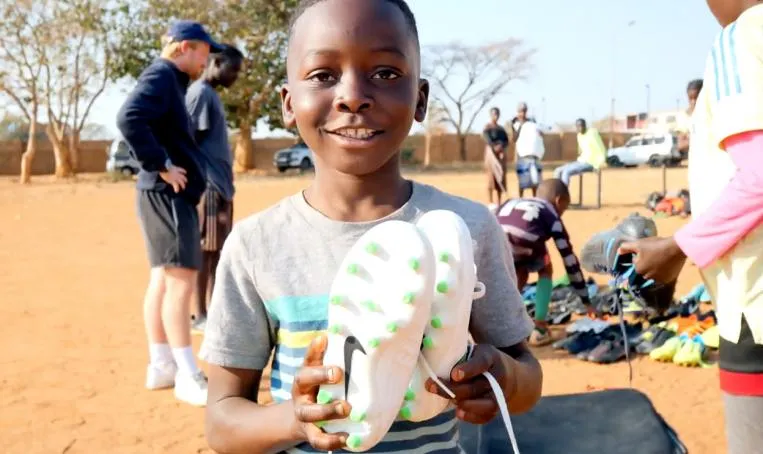
Meanwhile, in many of the communities where our partner programs operate, a single pair of boots might be shared between siblings, or a child might play in sneakers or bare feet because proper gear simply isn't available. The mismatch is almost absurd: one continent's closets overflowing with half-used gear, another's pitches full of kids who would treasure it.
That gap is exactly why Boots for Africa exists. And the outgrown-cleat shelf is our single richest source of donations.
From Guilt to Tradition: The Henderson Family
Maria Henderson of Columbus, Ohio, remembers the moment the shelf stopped being background clutter. Her then-nine-year-old, Diego, asked why they were throwing a pair of cleats in the trash that still had "basically all the spikes."
"I didn't have a good answer," she laughs. "So we looked up what to do with used cleats, found a local drive, and shipped off four pairs that weekend."
Three years later, the tradition has evolved. Before every new season, Diego picks out his old pair, cleans them himself, and writes his shoe size on a note tucked inside. "He calls it his assist," Maria says. "He's up to six assists."
The Hendersons aren't unusual, either. We've heard from families in Texas who hold a pre-season "boot handoff" with their club, from a grandmother in Georgia who collects her grandchildren's outgrown pairs like a savings account, and from a Colorado team that dedicates its first practice of the fall to a gear swap and donation table.
What the Shelf Could Become
Here's the argument we'd make to every parent staring at that pile: the outgrown-cleat shelf is a hidden philanthropic engine, and it's idling. American youth soccer enrollment sits in the millions. If even a fraction of those households turned their annual gear churn into an annual giving habit, the supply problem that keeps so many kids off organized pitches would shrink dramatically.
But the deeper shift is cultural, and it happens at home. When a child cleans their old boots and hands them over — when they see that shelf not as clutter but as inventory for someone who needs it — the ritual of outgrowing gear stops feeling like waste. It becomes generosity on a schedule.
Diego Henderson put it better than we could: "They were going to sit there forever. Now they get to play forever."
Your Shelf Is Waiting
If you've got a stack of almost-new cleats gathering dust, consider this your nudge. Check our donation guide for prep tips, find a drop-off point or upcoming drive near you, and make the handoff a family ritual. That shelf isn't storage. It's a starting lineup waiting to be called up.