Last Whistle, First Kick: Why Muddy November Beats a Clean-Out Box Every Time
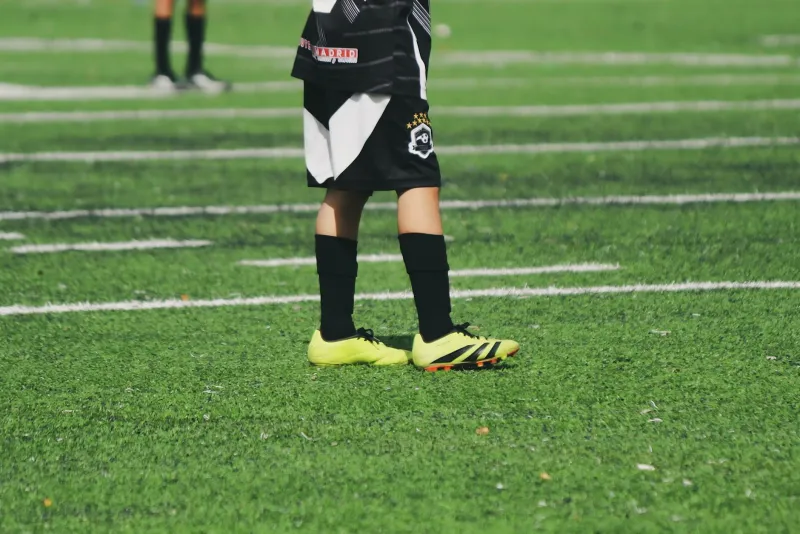
There is a specific Saturday in November that every soccer parent in America knows by heart. The temperature drops ten degrees between the car and the field. The grass is half mud, half frost. Somewhere around the second half, a kid loses a cleat in a puddle and comes up grinning anyway.
And then it's over. The whistle blows, the handshake line forms, and parents start stuffing folding chairs back into trunks. Somewhere in that pile of gear is a pair of size 3 cleats that no longer fit anybody in your house.
That moment — not August — is your best shot at getting those boots onto a kid who needs them. Here's how to make it count.
Why November Wins Over the Spring Clean-Out
The August donation box feels productive, but it is usually full of ghosts. A pair someone bought two seasons ago. A single right boot. Sizes that were fashionable in 2022. Most of it gets sorted, shipped, and quietly set aside because it is too worn or too small for anyone on the other end.
November is the opposite. The boots coming off feet right now just finished a real season. They are current sizes, current styles, and broken in exactly the way a kid wants them to be. Better yet, the parents standing next to you are already annoyed by the clutter. You are not asking them to plan a project. You are offering to take a problem off their hands in the next four minutes.
There is a logistics bonus too. November sits in a lull between back-to-school drives and the December holiday rush, which means donated gear moves faster and lands on feet sooner instead of sitting in a warehouse until February.
The Four-Minute Sideline Setup
You do not need a permit or a permit-sized budget. You need a trunk and a little nerve.
- A plastic storage bin with a lid, plus a few kitchen bags for the truly disastrous pairs.
- A folding table if you have one. A tailgate works fine if you do not.
- A Sharpie and a roll of painter's tape for labeling sizes.
- Rubber bands so pairs stay pairs. You will lose more singles than you expect.
- A simple sign. Something like Outgrown cleats? We'll take them right now. Handwritten is better than printed, honestly.
- A QR code to your club's donation page or to ours, taped to the table.
Ask the coach for sixty seconds before the handshake line — not after, when everyone is already halfway to the parking lot. If the coach forgets, ask the team manager. If the team manager forgets, stand near the snack table and be friendly. People will hand you boots if you make it easy.
Yes, the Mud Is Fine. The Neglect Isn't.
Mud is the number one reason people tell us they threw their kid's cleats away instead of donating them. It should not be.
Field mud — the wet, grassy, cleat-clogging kind — is not a problem. Knock the big clumps off against a curb, let the boots dry at room temperature, and brush them out with a stiff brush once they are dry. That is it. Mud that dries and gets brushed off has almost no effect on a boot's usable life.
What does kill cleats is heat. Do not put them on a radiator, in front of a space heater, or in the dryer. The glue that holds the sole plate on softens and lets go. A cold, dry garage corner is better than a warm oven every single time.
If the boots are soaked through, hose them off with cold water, stuff them with crumpled newspaper, and swap the paper once or twice over the next day. Pull the laces out and wash them separately in a mesh bag. Then let everything air dry completely before it goes into any bag or bin. Wet boots sealed in plastic for a week are how you end up with a science experiment instead of a donation.
What to Say at the Handshake Line
Keep it short and specific. Something like: "If your player has outgrown a pair, we're collecting today — they go straight to kids who'll be playing in them this winter."
That last part matters. People give more freely when they know the item has somewhere to go, not just somewhere to sit. If a parent hesitates, offer to take the boots right then and there. Do not ask them to bring them next week. Next week does not exist in youth soccer.
The Tailgate Sort
When the last family walks away, spend ten minutes sorting before you drive home.
Pair everything up. Rubber-band each pair. Write the size on a piece of tape across the band — not on the boot itself, where marker can bleed into the leather. Group pairs by size range into separate bags: youth small, youth large, adult small, and so on. Snap one photo of the whole haul and log the count. That photo is the single best thing you can post to your club's group chat, because it tells next year's parents exactly what is possible.
Set aside anything with a cracked sole plate or a blown-out toe. Those can often be saved with a repair kit, but they should not go into the main bin where they will slow down sorting on the other end.
Then Get Them Moving
Dry, sorted, labeled — now ship or hand off within a week. Do not let the bin live in your garage until spring. That is how good intentions turn into a moldy duffel and a quiet decision to throw everything out.
If your club has a partner organization, coordinate the handoff now. If it does not, we can help you find the next step. The whole point of a November drive is speed: boots that come off a cold field this weekend should be on a warm field somewhere else before the season turns over.
Every pair tells a story. The best ones start with a kid shivering on a sideline, yanking off a muddy boot, and handing it to someone who will not have to wait until August.