From Recipient to Organizer: The Alumni Turning Old Cleats Into a New Generation of Giving
Photo: Unknown authorUnknown author, Public domain, via Wikimedia Commons
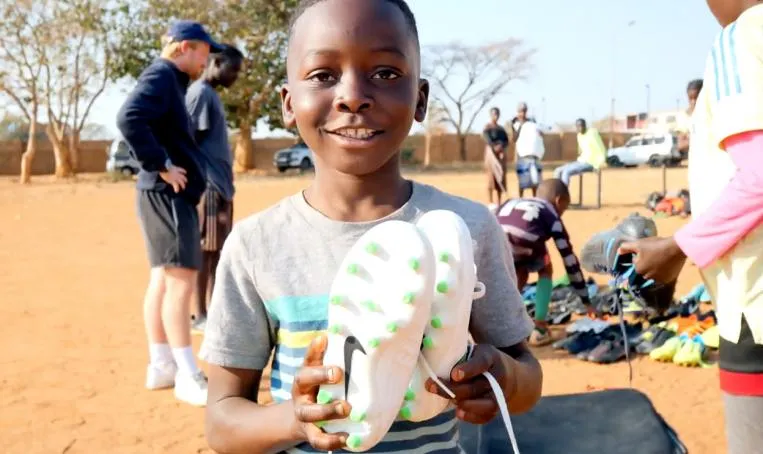
Samuel Okoye can still picture the boots. Red laces, a scuffed toe he didn't mind one bit, and a fit that finally matched his feet. He was nine years old, living in Lagos, when a shipment organized by Boots for Africa landed at his community club. Today he's nineteen, a sophomore at Ohio State, and last spring he filled a pickup truck bed with 214 pairs of cleats he collected himself.
"People ask why I bother," he says, laughing. "I bother because I remember exactly what it felt like to open that box."
The Moment a Donation Becomes a Calling
Here's the thing about charity work that doesn't show up in annual reports: the kids on the receiving end grow up. And when they do, some of them come back — not as beneficiaries, but as organizers.
Our alumni network started informally. A former recipient here, a family that relocated to the US there. But over the past three years, we've watched a pattern emerge. Young adults who once pulled on donated boots are now hosting drives at their high schools, staffing sort days at our warehouse partners, and mentoring the next wave of volunteers.
Amina Diallo, who received her first pair in Dakar at age eleven, now coordinates a college chapter in Atlanta. "My teammates assumed I joined to give back," she says. "Honestly? I joined because nobody understands this work like someone who's lived it. I know which sizes vanish first. I know that a note tucked in the box matters more than the box."
Why Alumni-Led Drives Hit Different
There's a practical upside, too. Alumni organizers bring an insider's knowledge that no amount of planning can replicate:
- Sizing intuition. They remember the gap between the sizes kids needed and the sizes that showed up.
- Cultural context. They know which pitches chew through outsoles and which playing surfaces are forgiving.
- Credibility. When an alumni speaker tells a youth team in Texas that their donated cleats will matter, the room listens differently.
One alumni-organized drive in Houston brought in nearly double the donations of comparable events — and, crucially, a much higher share of the sizes our partners on the ground actually requested.
What a Decade of Giving Teaches You About Sustainability
Ten years into this work, we've learned that sustainable charity isn't about one big moment. It's about building a loop. A pair of boots changes a season. Sometimes it changes a life. And sometimes, that life comes back around and changes the program.
That's the full circle: a boy in Lagos becomes a young man in Ohio becomes the reason a seven-year-old somewhere laces up for her first real match. No board meeting predicted that. No strategic plan could have scripted it.
How You Can Join the Loop
If you're a former recipient reading this — we want to hear from you. If you're a donor or a coach, consider inviting an alumni speaker to your next drive. And if you're just someone with a garage full of outgrown cleats, know this: those boots might be starting a story that takes ten years to come back around.
Samuel's advice for new volunteers is simple. "Don't think of it as donating," he says. "Think of it as passing something forward that was passed to you."
Red laces optional.