The Cleat Size Chart America Keeps Getting Backward

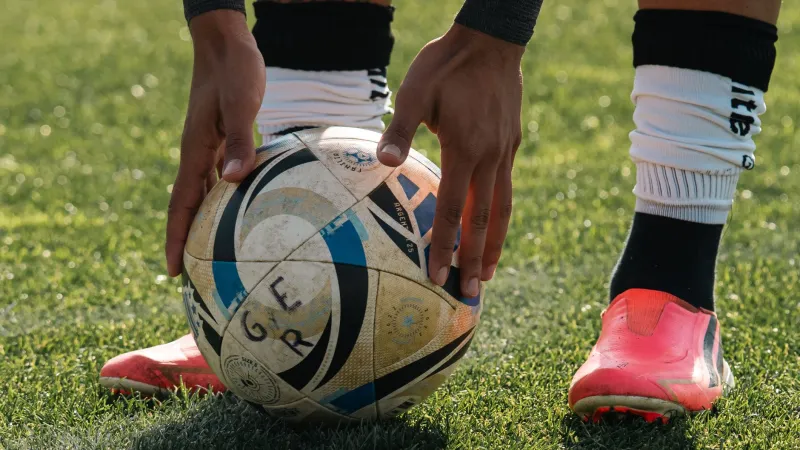
Photo by Photo by Chizon on Unsplash on Unsplash
Size 10 is not the villain. It is just the most common cleat size in the American donation stream, and that fact tells us less about generosity than about closets.
Boots for Africa logged more than 12,000 pairs of donated cleats in the 2026 collection year. We stripped names, locations, and donor details, then looked at one thing: size. The pattern was clear enough to share, and practical enough to change how drives get run.
What Arrives Most Often
The top donated sizes were adult US 9, 10, and 11. That makes sense. A lot of American donors are adults clearing out their own old gear or buying for teenagers who grow fast. Youth sizes 4, 5, and 6 also showed up in strong numbers, usually from families with elementary-school players.
The surprise was not the peak at size 10. The surprise was how narrow the donation curve was. A huge share of incoming pairs clustered in a handful of adult sizes, while the far ends of the size range thinned out fast.
What Kids Actually Need
Partner programs told a different story. Their wish lists skewed younger. The most requested sizes were youth 1 through 5, with steady demand for adult 6 through 8. Those are the awkward middle sizes: too big for the smallest kids, too small for the adults who often do the donating.
That gap is the whole ballgame. A pair of size 10 cleats can be excellent gear. But if the local partner program is outfitting 8-year-olds, that pair may sit in a box until it finds the right older player or gets shipped to a program with adult-sized teens.
Where the Biggest Mismatch Hides
The mismatch is not random. It shows up in three predictable places.
First, adult sizes are overrepresented in standard donation boxes. People donate what they have, and adults have adult feet. Second, youth sizes are underrepresented because kids wear them out faster and families often pass them down until they are truly dead. Third, the middle sizes, adult 6 to 8, are the quiet workhorses. They are requested often but donated less often than the size 10 cluster.
We also saw a condition mismatch. A clean, barely worn size 10 arrives more often than a clean, barely worn youth 3. That is not a knock on donors. It is a supply chain fact. Adult casual players buy boots and quit. Kids play until the toe blows out.
What This Means for Donors
If you are buying new cleats to donate, buy youth sizes. That is the simplest lever. A youth 2 or youth 3 is not glamorous, but it is exactly what many partner programs need. If you are cleaning out a closet, send the adult pair anyway. It will find a home. Just do not assume your size is the size in demand.
Check the size tag before you bag the pair. Youth sizes and adult sizes can look similar on the shelf. Write the size on the bag in marker. Include the sport. A size 4 soccer cleat and a size 4 baseball cleat are not interchangeable for every program.
And do not throw away the small pairs just because they look tiny. A youth 1 may look like a child's shoe to an adult, but it is a real cleat for a real player.
What This Means for Coaches
Coaches are sitting on useful data. Before a team clears out its lost-and-found, ask the local partner program what sizes it needs. A simple survey of your roster can tell you whether the pile should be sorted for youth 3s or adult 8s. If your team has a lot of older players, consider pairing with a younger club for the drive.
Coaches can also normalize the hand-me-down. A player who outgrows a pair in one season is not done with that pair. The cleat has another season in it, just not on the same foot.
What This Means for Drive Organizers
Publish a wish list before you collect. Put the top three needed sizes on the flyer. Sort by size before you sort by sport. That one change makes a box far more useful to a partner program, because they can open it and know immediately whether it matches their roster.
Keep a small inventory sheet. You do not need software. A clipboard with columns for size, sport, and condition is enough. At the end of the drive, count the sizes. If you see a wall of adult 10s and a thin row of youth 3s, you know what to ask for next time.
The Point Is Not Guilt
No one should feel bad about the cleats already in the closet. The size 10 cluster is not a failure. It is a starting point. The goal is to match generosity to need, not to make donors feel like they brought the wrong pair.
A size 10 cleat still has a story. It might be a high schooler's first pair, or a coach's spare, or a weekend player's old backup. The work is making sure that story connects to the right feet. Boots for Africa would rather have a messy, honest pile than a perfect one that never leaves the porch.
So bring the size 10. Bring the size 3. Label both. The chart is only backward if we ignore it.